Tendances IA 2026-2027 — Modèles émergents, infrastructure et compétitivité
Le horizon de l'IA : modèles plus puissants, open-source qui monte, AI-native products, coûts qui baissent.
Trend 1 : Modèles plus forts, plus cheapos
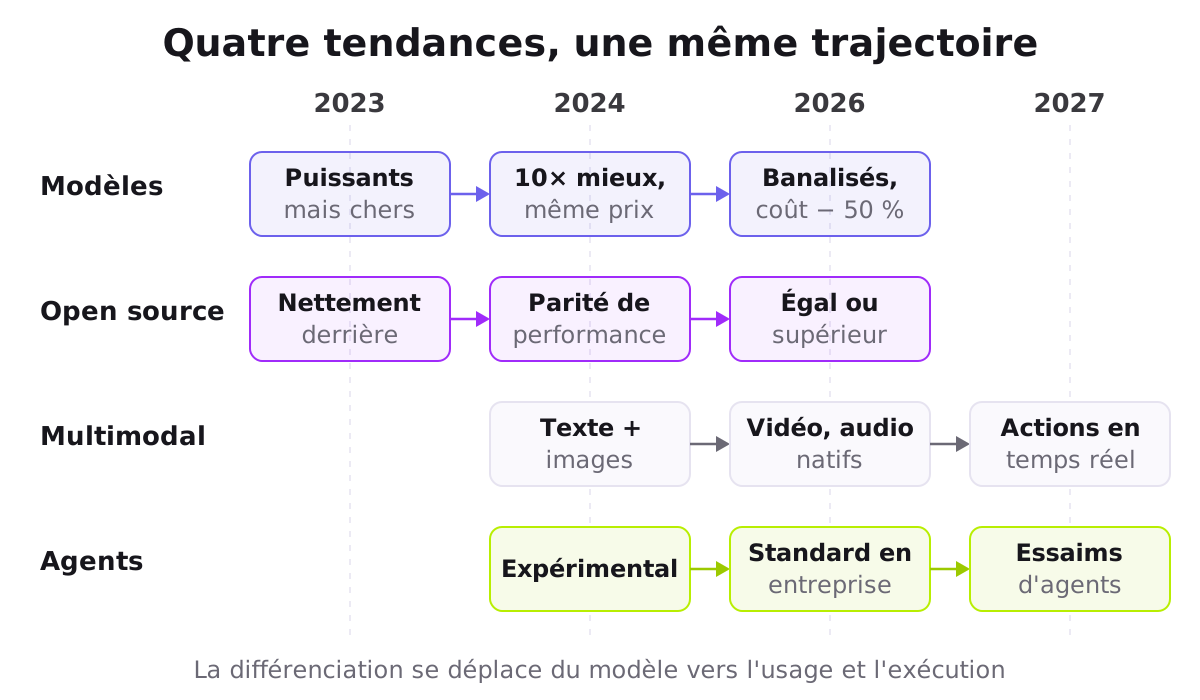
2023 : Claude 2 (200B tokens context) = $$ premium 2024 : Claude 3.5 Sonnet (200B tokens) = $ standard (10x meilleur, même prix) 2026 : Multimodal, 500B+ context, cost ↓ 50%+ = commoditized
Impact : LLMs deviennent comme l'électricité (utility). Differentiation = use case, not model.
Trend 2 : Open-source catching up
2023 : Llama 2 (70B) vs Claude 3 (Sonnet) = Claude 3x better 2024 : Llama 2, Mistral, Deepseek ≈ Claude (performance parity) 2026 : Open-source ≥ Closed-source on most benchmarks
Impact :
- Companies can self-host
- Cost goes to zero (just compute)
- But : Closed models still lead on safety, alignment
Trend 3 : Multimodal (text → vision → audio → video)
Now : Claude can process text + images 2026 : Real-time video understanding, audio processing native 2027 : Model ingests video stream, outputs actions in real-time
Use cases :
- Manufacturing : AI vision monitors assembly line → alerts
- Surgery : AI watches procedure, explains best practice
- Manufacturing : Defect detection in real-time
Trend 4 : AI-native products (apps built for AI-first)
Old : Slack, Figma, Salesforce + IA plugin New : Products built from the ground-up for AI
Examples :
- Notion with AI (native, seamless)
- GitHub Copilot (IDE + AI = one thing)
- Claude.ai (chat interface is the product)
Implication : Products without AI-first design will look obsolete.
Trend 5 : Agents everywhere
2024 : Agents = experimental, few companies 2026 : Agents = standard (every enterprise has some) 2027 : Agent swarms = teams of agents working together
Use case :
Agent 1 (research) → Agent 2 (analysis) → Agent 3 (communication)
Teams of agents solve complex problems autonomously
Trend 6 : Commoditization of inference
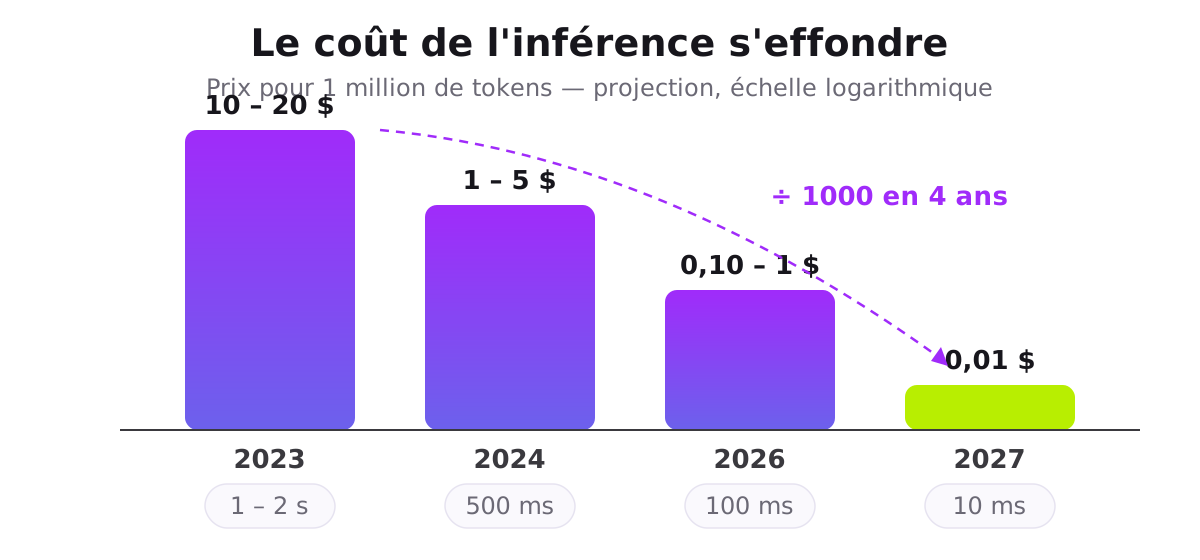
Impact : Price/performance = 10-100x improvement over 3 years
| Year | Cost/1M tokens | Time |
|---|---|---|
| 2023 | $10-20 | 1-2 sec |
| 2024 | $1-5 | 500ms |
| 2026 | $0.10-1 | 100ms |
| 2027 | $0.01 | 10ms |
Implication : AI becomes cost-negligible. Deployment friction = only concern.
What this means for your business
If you're a SaaS company
Action : AI-ify your product ASAP or become replaced.
2026 landscape:
- Competitors all have AI
- Customers expect AI
- Difference = quality of implementation + support

Strategy:
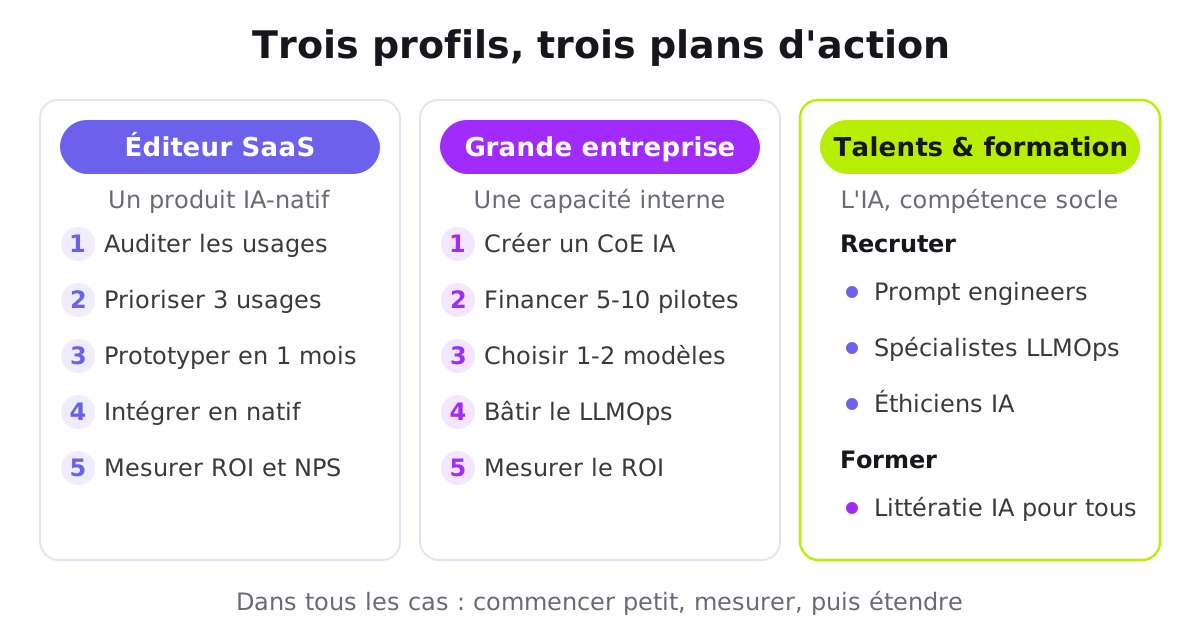
1. Audit : Where does AI make sense ?
2. Prioritize : Pick 3 features
3. Prototype : 2-4 week pilot
4. Integrate : Make it native (not plugin)
5. Measure : ROI, NPS, retention
If you're a large enterprise
Action : Build internal AI capabilities (don't just outsource).
Strategy:
1. Establish AI CoE (Center of Excellence)
2. Fund 5-10 pilots (across departments)
3. Standardize on 1-2 models (Claude, Llama, internal)
4. Build internal LLMOps capability
5. Measure ROI rigorously
If you're hiring/training
Action : AI skills now table stakes.
New roles to hire:
- Prompt engineers
- LLM Ops specialists
- AI strategy consultants
- AI ethicists

Existing roles to reskill:
- Everyone. AI literacy mandatory.
Risks (not all upside)
Risk 1 : Consolidation
Only Big Tech can afford R&D. Market concentration ↑.
Risk 2 : Commoditization squeeze
If everyone has access to same model → profit = execution only.
Risk 3 : Regulation
EU/US/China may restrict AI. Uncertainty continues.
Risk 4 : Security
AI models used for attacks (deepfakes, social engineering).
À lire ensuite : Risques systémiques et opportunités — AGI, sécurité, transformation
: la modale et son overlay sont volontairement HORS de .tutoriel-container (ci-dessous) pour ne jamais être capturés par le split de contenu de tutoriel-gating.js, qui vide et reconstruit innerHTML de part et d'autre du marqueur — sinon la modale se retrouvait imbriquée dans .tutoriel-gated (donc cachée avec lui) et devenait impossible à afficher. -->Voir tout le parcours du tutoriel →

Le jumeau numérique de Youssef te répond en direct — il connaît la méthode et peut t'expliquer autrement.
Envie d'aller plus loin avec l'IA ?
Nos formations sont live, pratiques et certifiantes — appliquées à ton métier.
Voir les formations